A door that rubs, catches, or has to be shoulder-checked shut is rarely a sign of anything serious. In most homes it comes down to one of three things, and the first one takes a screwdriver and five minutes. The trick is to find which one before you start planing wood off a door that only needed a screw tightened.
Find where it rubs
Close the door on a sheet of paper at different points around the edge: the top corner on the handle side, halfway down, and the bottom. Where the paper is gripped hard or will not go in, the door is touching the frame.
Look for shiny, worn paint on the door edge or the frame. It shows exactly where the two meet.
- Rubbing at the top on the handle side: the door has dropped. Usually the hinges.
- Rubbing along the whole edge, worse in wet weather: the wood has swollen.
- A gap at the top on one side and rubbing on the other: the frame has moved.
Cause one: loose hinge screws
Doors are heavy, and the top hinge carries most of the weight. When its screws work loose, the door tips toward the handle side and the top corner hits the frame.
Open the door and hold it up
Open the door halfway and lift the handle side slightly, or slide a book under the bottom edge to take the weight.
Tighten every hinge screw
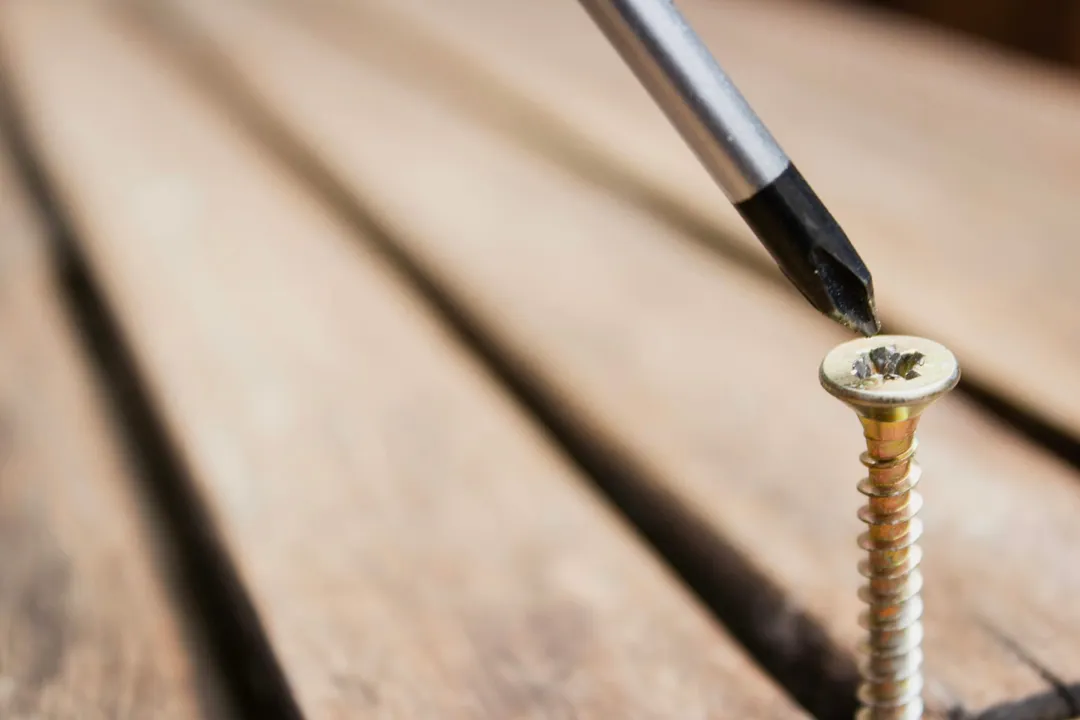
Tighten the screws in the top hinge first, on both the door and the frame side, then the others. Use a hand screwdriver: a drill can strip the hole.
Replace screws that spin
If a screw turns without tightening, replace it with one 20 mm longer, so it reaches the timber behind the frame. That pulls the whole door back toward the hinge side.
Close the door on the paper again. In about half the doors we see, the job ends here.
Cause two: the wood has swollen
Timber takes on water in damp months and shrinks again in dry ones. A door that sticks only in winter or after a week of rain has swollen, and it may stop sticking on its own by summer.
If it does not, the rubbing edge needs to come down by a millimetre or two. Mark the line where the paint is worn, take the door off its hinges, and plane or sand to the line. Seal the bare wood with paint or varnish the same day; unsealed wood absorbs water fastest, and the door sticks again.
Seal the top and bottom edges too
The top and bottom edges of a door are almost never painted, and they soak up moisture from the air. Sealing them while the door is off its hinges takes ten minutes and is the best way to stop a door swelling again.
Cause three: the frame has moved
A gap that is wide at the top on one side and tight on the other means the frame is no longer square. In older homes that is often normal settling. In newer homes it can be the house drying out in its first years.
Small movement can be taken up by packing a hinge: a strip of card behind the bottom hinge pushes the top of the door away from the frame. Larger movement means moving the strike plate or rehanging the door, which is a job for a technician with the right chisels.
When to call us
Call when a door has been planed before and still sticks, when cracks appear in the plaster around the frame, or when the door is fire rated. Fire doors must keep their gaps within set limits, so they should not be planed without checking first.
A sticking door is one of the most common tickets on our handyman visits, and it is often paired with two or three other small jobs from the same list.
Written by
Tom B.
Technician, repairs and carpets
Handles door, drawer, and carpet jobs across North Harbor, and tests every fix on his own house first.